People often want a floor color that is not available on a standard stain chart, or a look with more depth or grain contrast. We can develop it by custom-mixing stains, layering compatible colors, using colored oils, or applying reactive treatments when the wood is suitable.
Custom Color and Specialty Finish Options
Custom Stain Mixing
Standard colors from Bona and DuraSeal cover a lot of projects. When one is close but needs adjustment, we can mix compatible colors within that stain system. A little gray may quiet a warm brown, or a dark color may need to be softened.
We use custom mixing for color coordination, not to promise an exact match. Wood species, age, sanding, sunlight, and nearby factory-finished materials still affect the result.
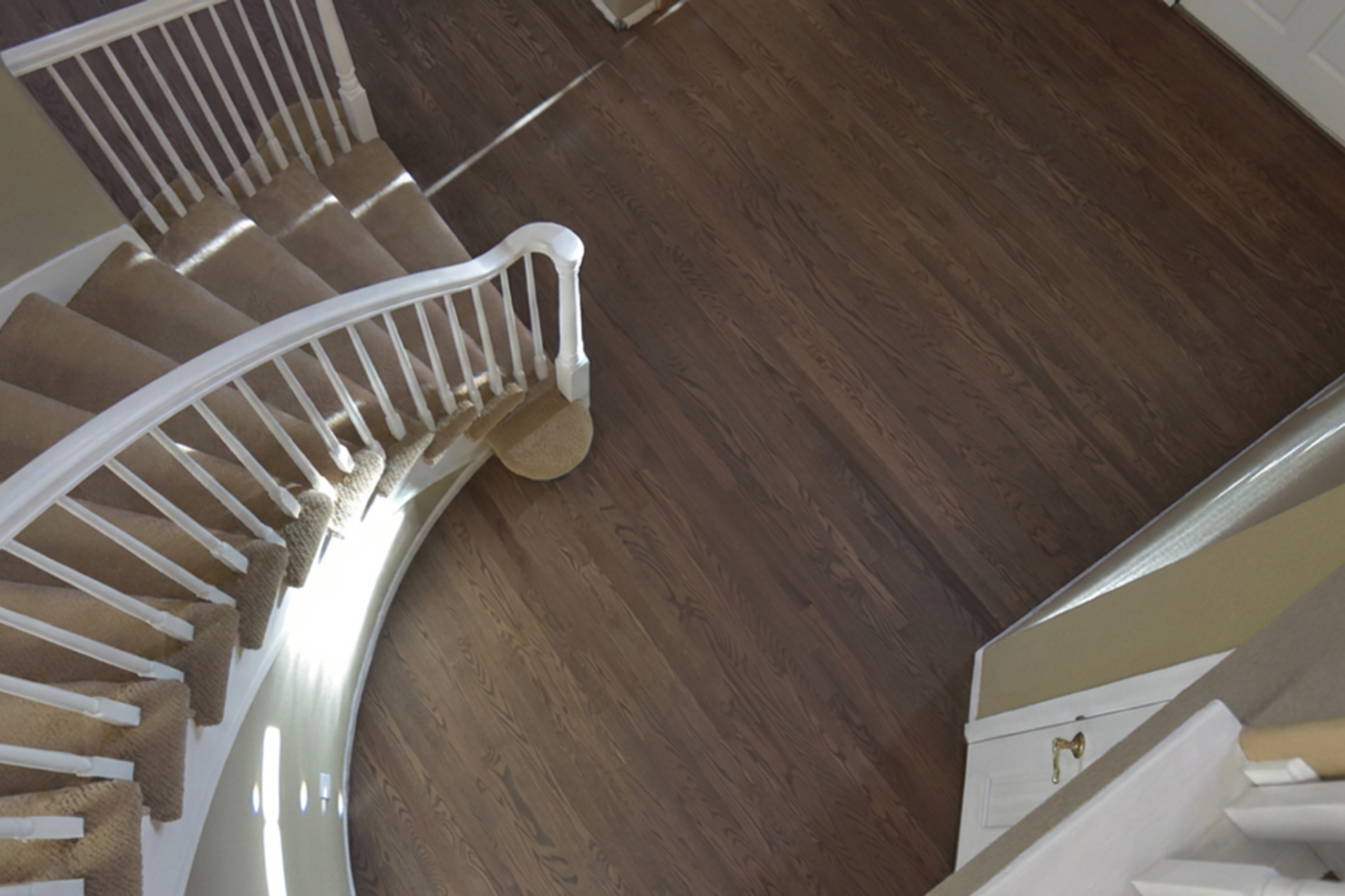
The Highlands Ranch floor shown here used a custom gray and brown Bona mix on red oak.
Layered Color
Mixing produces one applied color. Layering uses compatible color steps one after another so the background and grain can do different jobs. The floor may gain depth and movement without the individual layers looking obvious.
Depending on the floor, the intended look, and how the room will be used, we may use a LOBA layered color system, Bona Craft Oil 2K, PALLMANN Magic Oil 2K Color, or another tested combination. We test the complete color and finish schedule because every step needs to work with the next one.
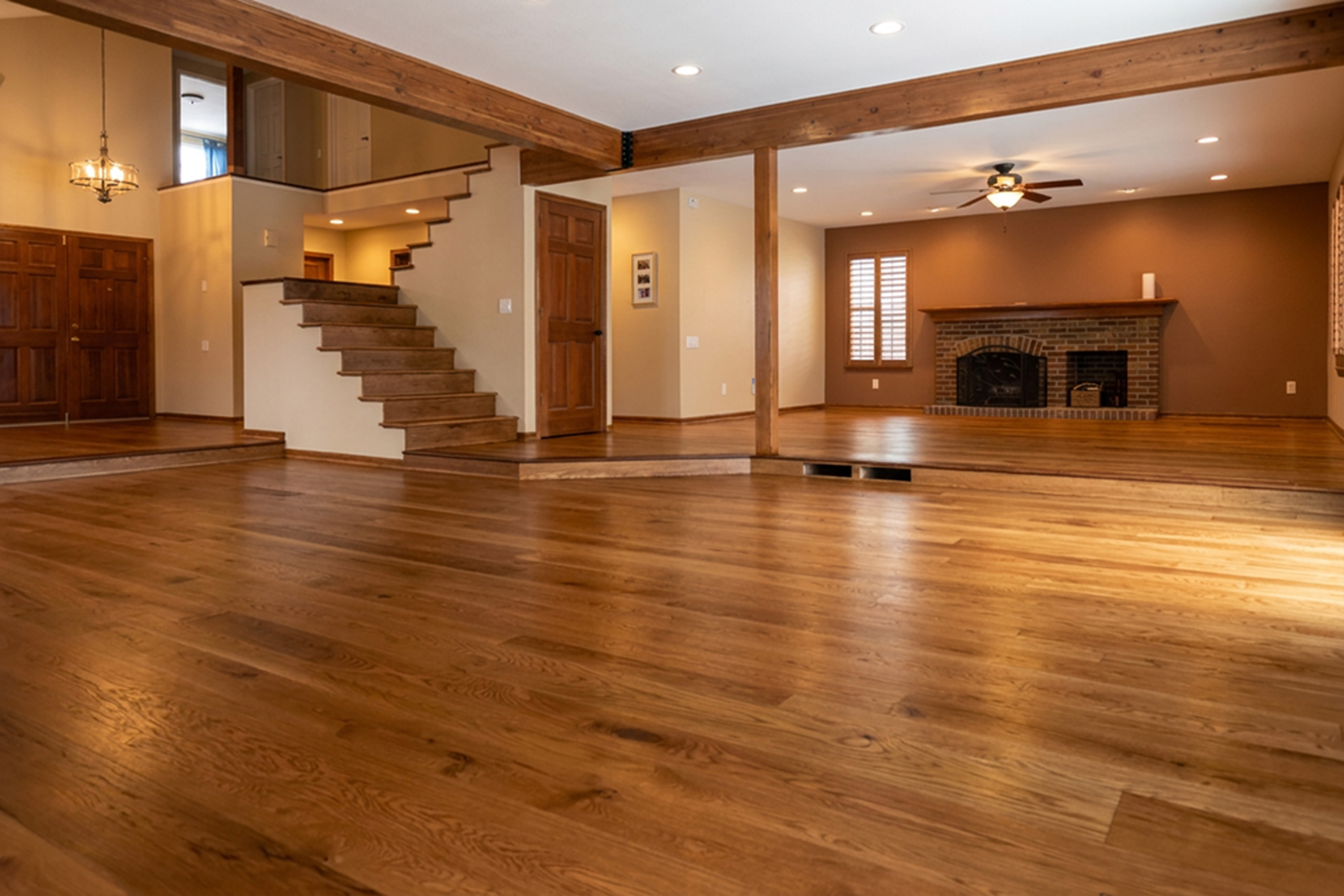
The floor shown here used two PALLMANN Magic Oil color steps, Natural followed by Brown.
Cerused and Grain-Contrasting Effects
A true cerused floor uses an open-grained wood, usually oak, with a contrasting color worked into the pores. Reactive and layered treatments can sometimes create a similar grain contrast, but the process is different and we identify it accurately.
Wire brushing can make the grain more pronounced and adds physical texture. On an existing floor, its condition and remaining thickness also need to make that preparation practical.
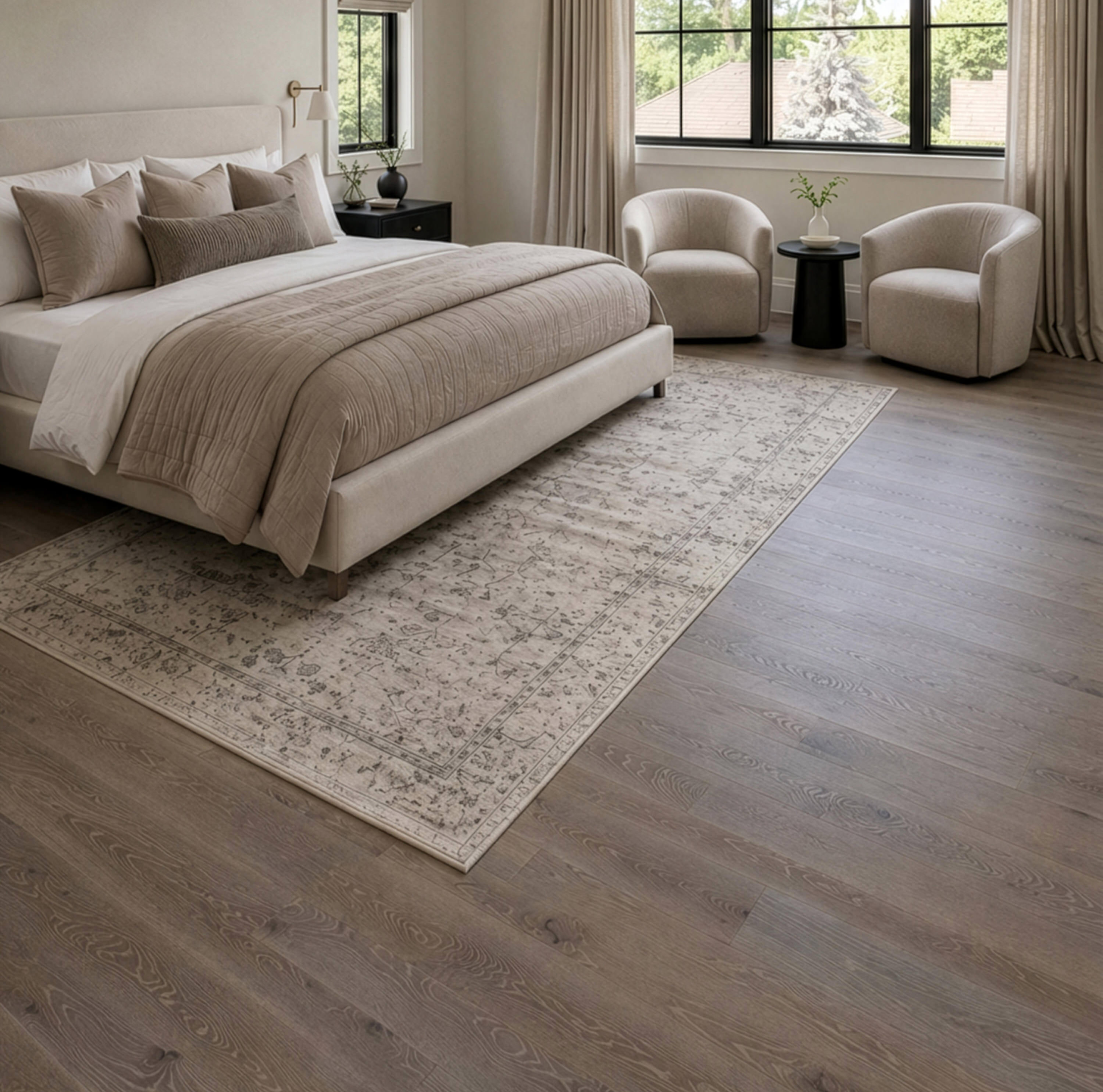
The bedroom floor shown here uses restrained grain contrast rather than a stark black-and-white effect.
Reactive Color
A reactive treatment changes color by reacting with compounds already in the wood. On tannin-rich woods such as white oak, it can create smoked or aged tones with natural board-to-board variation.
That variation is part of the result, so this is usually not the right approach when a nearly uniform floor is the goal. We only consider it after seeing how the actual floor behaves in samples. The reactive step creates the color; a compatible oil or coating completes the system.
The floor shown here used Rubio Monocoat Fumed, followed by White 5% oil.
Ebonized and Deep Ebony Tones
For a controlled charcoal or black floor, a custom pigment-stain blend may be the practical choice. True ebonizing is a separate iron-and-tannin reaction that darkens the wood itself.
We do not call a floor ebonized simply because it uses black stain or a color named Ebony. Very dark floors also show dust, pet hair, scratches, and small debris more readily, so that needs to be considered along with the appearance.
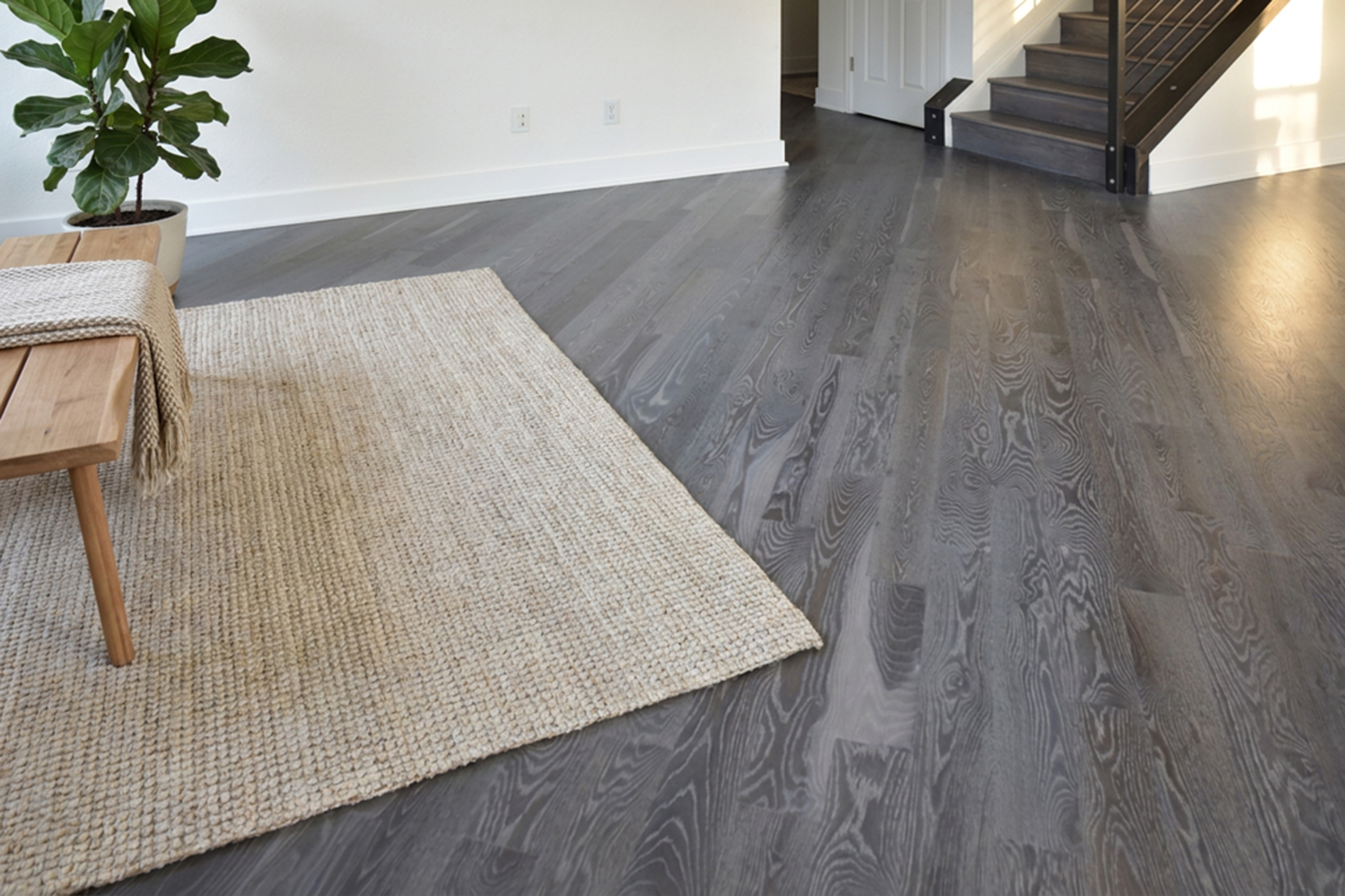
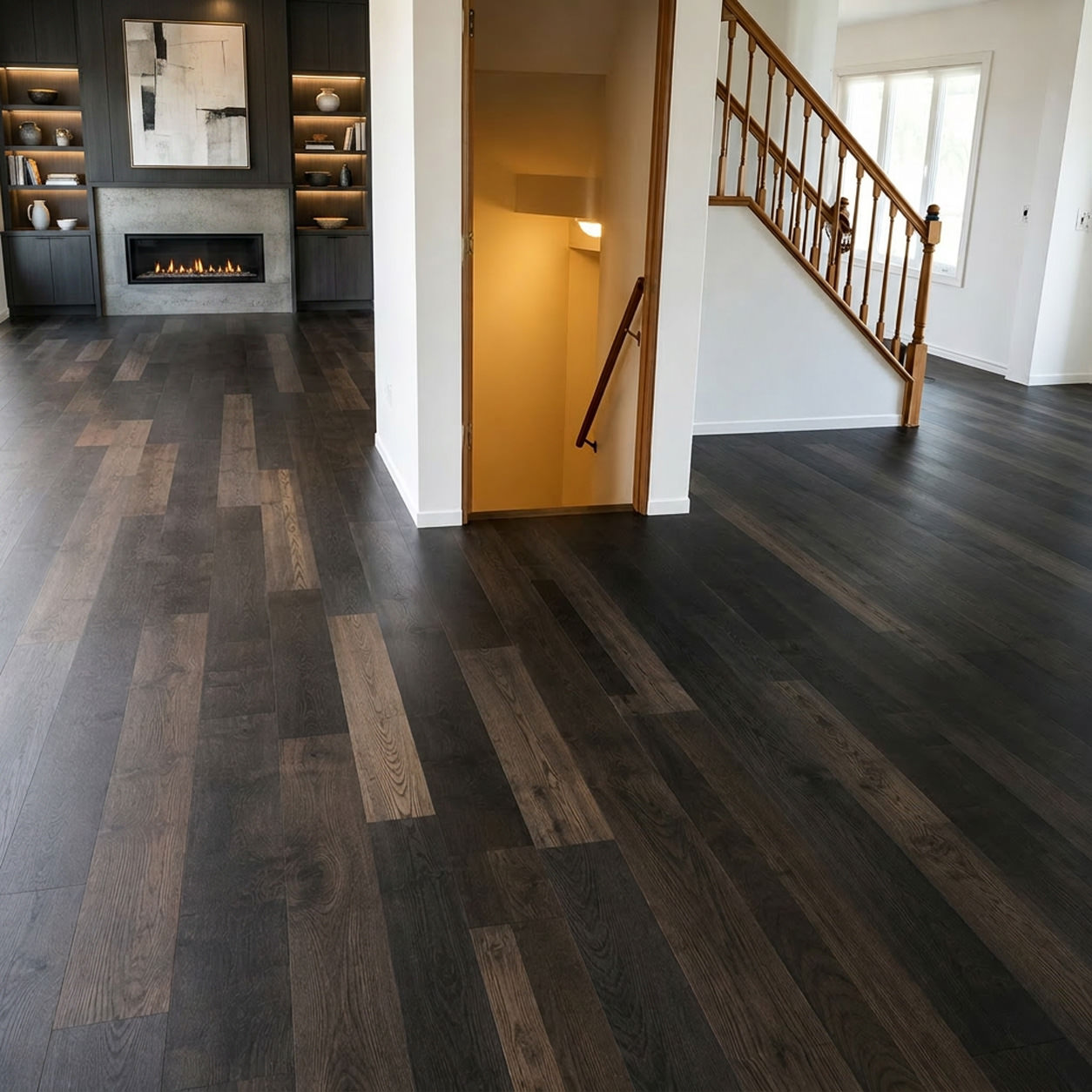
The ebonized oak floor shown here retains visible grain and board-to-board variation.
How We Develop a Custom Floor Color
- Show us the direction. Send inspiration photos and pictures of the floor, room, cabinets, stairs, or other materials the color needs to work with.
- We inspect the wood. We identify the species, existing conditions, and which color methods are realistic.
- We make floor samples. After sanding, we make samples on the floor for clients to review in their own home.
- We record the approved process. We document the preparation, mixture, timing, color steps, and finish needed to reproduce the approved sample.
An approved sample gives us a target, but individual boards will still vary. Color also changes as stain dries, the finish cures, and the floor responds to sunlight and normal aging.
Request a Custom Finish Consultation
Tell us whether the project involves an existing floor or a new installation. If the wood species is known, include it. Reference photos are helpful, along with pictures of the floor, room, cabinets, stairs, or other materials the color needs to work with.
We’ll review the floor, explain which options are realistic, and plan the samples needed before applying color across the project.
Request a custom finish consultation
For a closer look at the differences, read our plain-language guide to custom mixing, layered colors, cerusing, reactive treatments, and ebonizing.